This Saturday I’m going to the Roman Society’s annual colloquium, an afternoon of free talks that anyone can go to. Even though I’ve worked for the Society for some years doing their social media, I don’t usually go to the colloquium as it always clashes with a family birthday. The topic this year ‘Letters and Landscapes‘ is one that I’ve spent a large-chapter-of-a-PhD’s worth of time thinking about, or at least the ‘Letters’ part. These include some pretty well known ancient letters that pop up regularly on podcasts and probably TikToks (I’m not on TikTok) as well as Instagram and on the news. These are the Latin missives Claudia Severa, a Roman officer’s wife sent to Sulpicia Lepidina, the wife of a fort commander at Vindolanda round about 100 CE. You might know them, and as I’ve just mentioned a birthday obligation, you might remember that the most famous of the letters is a very formal invitation to a birthday celebration (including a probably tiresome religious ceremony). As interesting as Severa and Lepidina’s correspondence is, it’s not actually their letters that I’ve been thinking about most recently.
Severa’s letters are frequently said to be the earliest writing by a woman in Britain. But there’s another letter that is as old as the letters between Severa and Lepidina, and that is the note sent to Lepidina by a woman who was probably called Paterna. Her name has partly disappeared from the fragile bit of wood tablet it was inked on – these are very fragile bits of wood, as I know because I’ve excavated one at Vindolanda. Really, it’s a miracle that they survive at all. Questionable name aside, the Latin of this letter shows the sender is very clearly a woman. It may not be Paterna’s handwriting, as the vast majority of the letters are written by scribes, with a post-script added in the sender’s own hand. In Paterna’s letter, the part of the letter where the post-script would go has broken away so we can’t say.
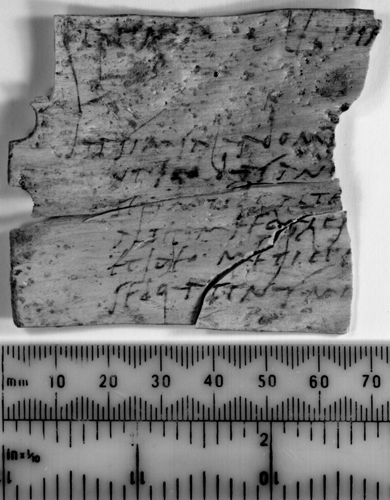
Who was ‘Paterna’ then? One real possibility is that she is either an enslaved or freed woman. This is because she writes to Lepidina calling her ‘mistress’. Within the rest of the letters free people use familial endearments like ‘sister’ or ‘father’ when they write. Enslaved men and women, however, seem to have used terms like ‘mistress’ instead, although there are not many letters that survive where it’s clear the sender is enslaved. There is a rather amazing letter sent in Roman Egypt by an enslaved man called Palas who addresses his owner, another fort commander as ‘the master of my soul and wielder of power,’ which could be a reasonable parallel, although it’s written in Greek and dates from about 342 to 351 CE, so about 250 years after the Vindolanda letters.
Wealthy women like Sulpicia Lepidina had enslaved women to cater to their desires, and some of these slaves were literate. Epitaphs at Rome show that some enslaved women had specialised roles as lectrices, readers, such as another Sulpicia,who was named Petale when she was a slave. There are a handful of these inscriptions for enslaved women readers, and rather more for men. Most of our information about individual people’s jobs comes from their epitaphs, and there are a lot more epitaphs for men than there are for women in general. Even if she got an epitaph, a woman was most likely to be described as a wife or mother, than celebrated for anything else she did, a trend that has continued for centuries. Nor do women’s letters usually survive, even when we know that they wrote because we have people like Cicero’s replies to them. The relationship between who does the work, and who gets to have their name on the work is always complicated. I’m half-way through Candida Moss’ new book ‘Gods Ghostwriters’ who goes into the contribution enslaved people made to writing the bible, which is part of a flourishing of academic re-thinking about ancient slavery and the contributions enslaved men and women have made to our history and culture.
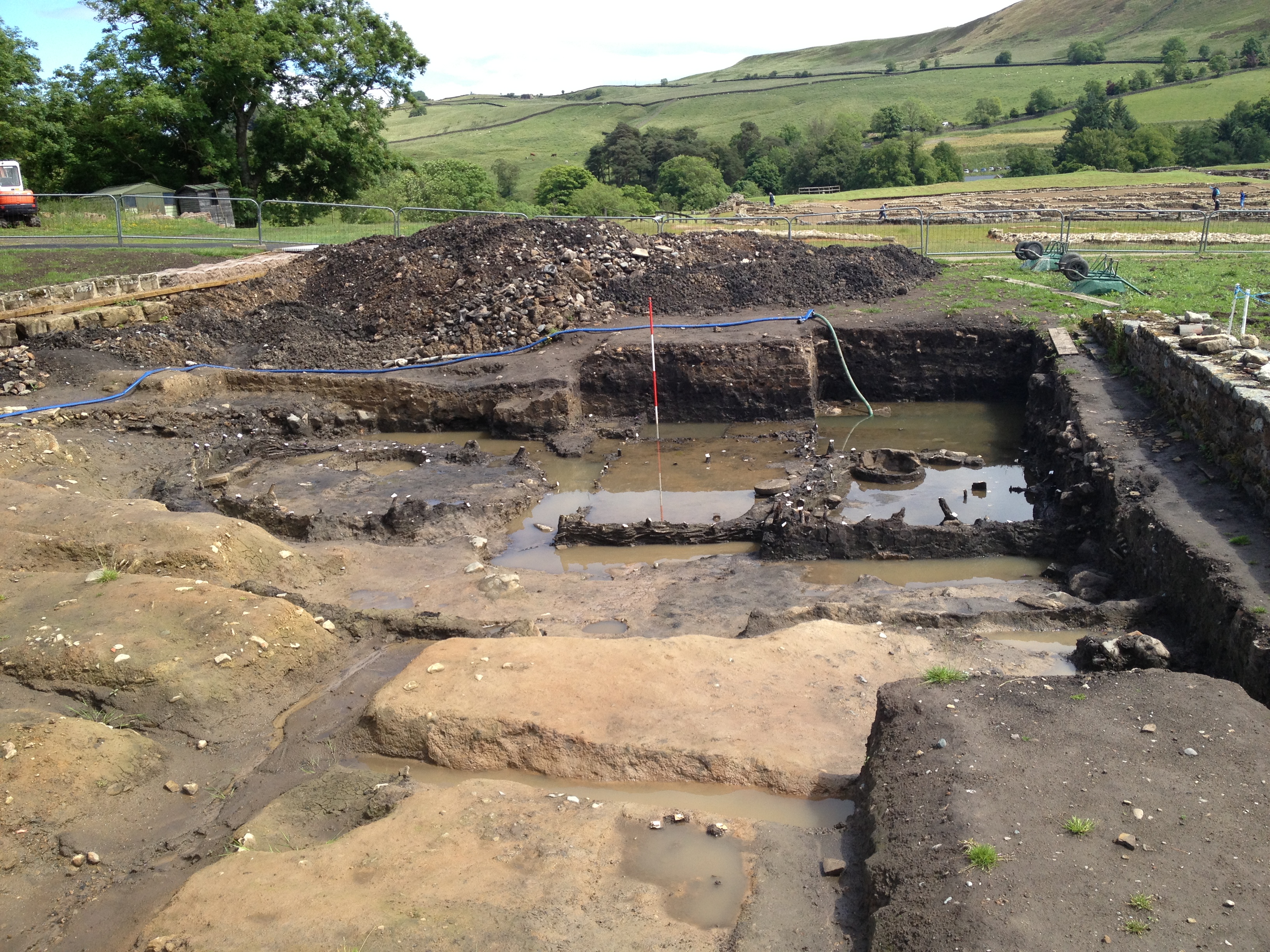
So, back to Paterna-or-whatever-her-name-is. We don’t know her name because her letter has been damaged prior to excavation, which is just something that does happen to these very old writing tablets. But erasing someone’s name also happens because when people were enslaved, their enslavers would give them any name they fancy, as happened to ‘Petale’ – the translated text of her epitaph actually says this “to whom had been given the slave name Petale“. Grimmer documents also attest these frequent name changes. Sale contracts for Roman slaves included stock phrases ‘or by whatever name he/she is known’ because their names could be changed at an enslaver’s whim. A contract found at London for the purchase of Fortunata is a good example. This particular contract also shows how those enslaved could also enslave others; slavery was as much a hierarchical system as the rest of Roman society. Which again brings us back to Paterna. Her letter talks about bringing either remedies for fever, or two enslaved girls free of fever: the text is too damaged to decide between the translations. But we don’t really get to choose. Even if this woman was bringing medicines and not enslaved girls, we know that enslaved people worked at Vindolanda. Their hands wrote the scribes part of the texts, men like Audax read letters from their enslavers, and even young children were there to be abused and worked – the young girl whose body was disposed of under a barrack floor was most probably enslaved. A contract for a slave purchase discovered at the fort in 2014 adds to this evidence.
The birthday invitation and other letters from an officer’s wife, with her own handwriting on it, is important evidence that women from the stratum of society that produced officers’ wives were normally literate. The really interesting thing to me is not that it’s (maybe not) the oldest writing we have by a woman – at best it’s the oldest writing that we can put a woman’s name to in Britain – but how deeply writing and literacy permeated Roman life, both for men and women, including (perhaps especially) those enslaved. Writing and receiving letters, taking inventories, signing contracts, these were things that were routine on the frontier at this time, as they were across the Roman world. Focusing on Claudia Severa or Paterna’s letter being the oldest writing we know was by a woman rather hides that point.


You must be logged in to post a comment.