This is a superb account of the 1875 excavations of the Roman fort at South Shields published by two locally based historians, David Kidd and Jean Stokes. It draws painstakingly on newspaper clippings, drawings and photographs collected by Robert Blair, excavation committee secretary, held in the local history collection of The Word, South Shields. Taking this evidence along with museum artefacts the book attempts to produce an ‘eye-witness’ account of the earliest excavations.
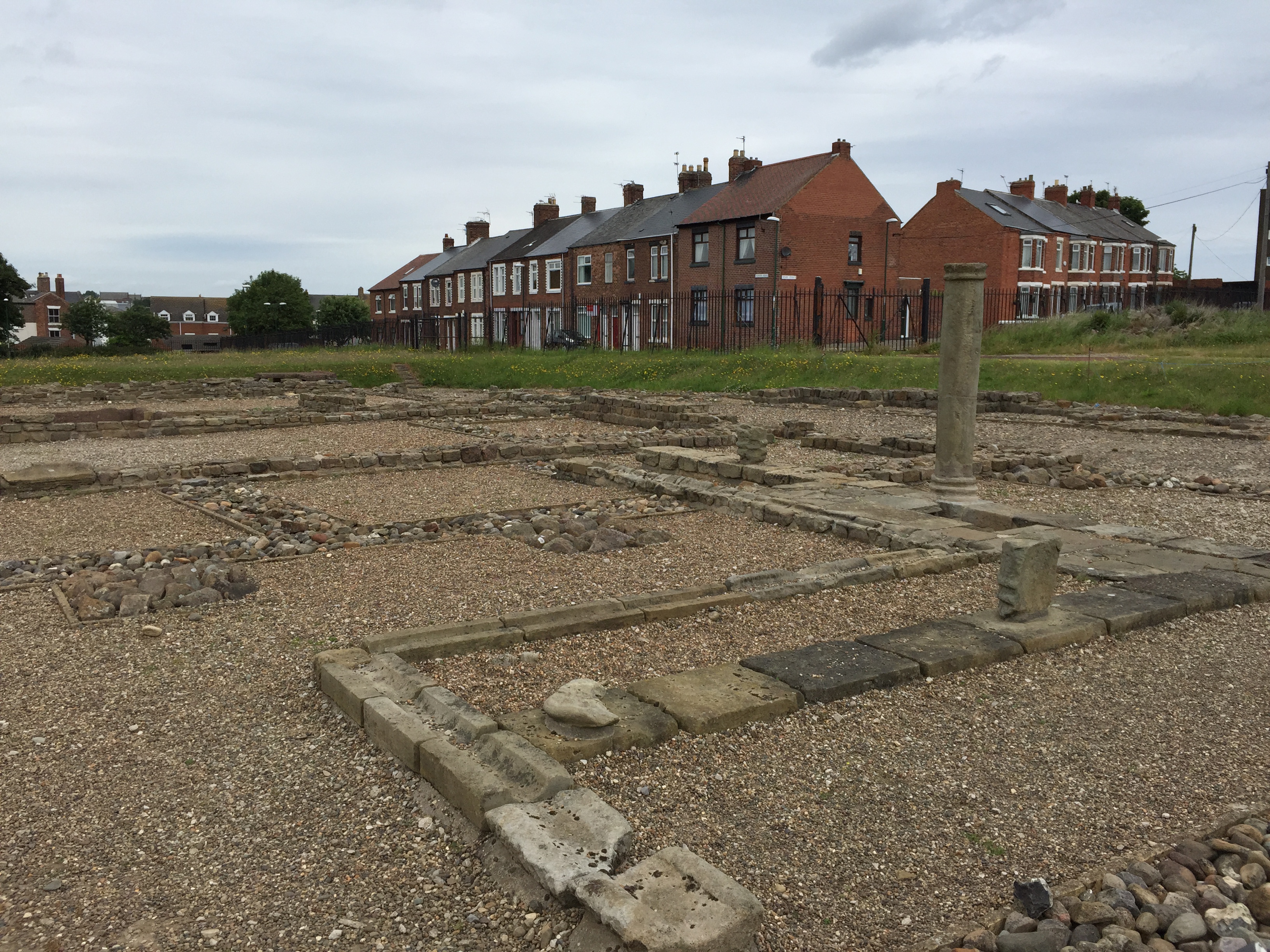
The result is both detailed sourcebook and a rich narrative history of the excavations at South Shields, with its perspectives sharply focused on the people who were involved in the dig in their various capacities.
Key source material is provided by the ‘scrapbook’ of Robert Blair, whose collection of contemporaneous news clippings and drawings of the excavations and finds – highly accurate to judge from the accompanying photographs – were posthumously indexed and conserved by local historian Amy Flagg, who deposited it in the town library as a resource for the people of South Shields.
The site was facing a probably rushed rescue dig ahead of development when the antiquarian Dr Robert Hooppell selected it for his attention. With his prodigy Robert Blair the two men campaigned for its better treatment, engaging the support of the Shields Gazette and Daily Telegraph, raising funds, and hosting well-attended public meetings. Excavations were carried out by workmen assigned to the dig by local landowner, naturalist and member of The Newcastle Society of Antiquaries, Mr Ralph Carr Ellison, with local volunteers supplementing work in the evenings and at weekends at least in the early part of the dig.
Stories of these men and probably women as well as – to judge from a photograph p.84 and back cover – children are lacking in the account, most probably due to the sources collected by Robert Blair. Seeking out their stories as a possible future project would be worthwhile. Kidd and Stokes discuss well the people of South Shields, from the pilots who volunteered on the excavation, to the Muslim seamen who came with the opening of the Suez canal.
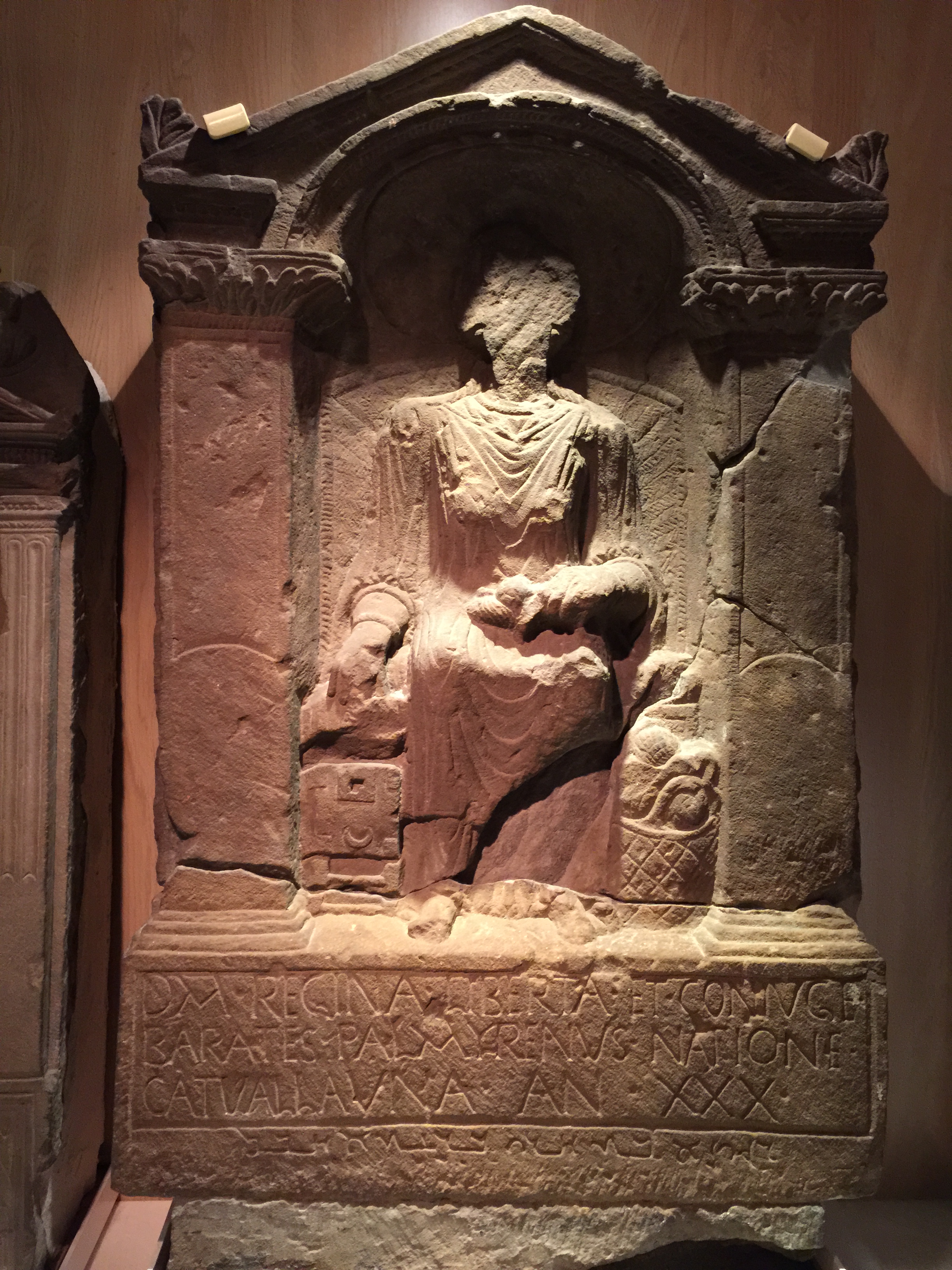
The parallels drawn between the Yemenis intermarrying into local families and regiments at the fort being chapters in what is a long history of migration to the town are well made, as evidenced by (among others) the Syrian Barates whose now-famous tombstone for his wife and former slave Regina were unearthed during the excavations. A picture of Mohammed and Rosetta Muckble, proprietors of the Yemeni seamen’s boarding house in 1930 helps to round out this picture of the port. My hesitation over the description of Barates relationship with Regina as “a great love story in history” (we have only his view, for a start) is a quibble compared with the authors’ willingness to tackle head on the fact of Roman slavery being endemic, which is too often glossed in much writing about Roman antiquity. Similarly effective is the discussion of the lives of gladiators and the 1977 visit of Muhammed Ali to South Shields. A picture of a blue glass vase depicting the face of a black gladiator from Robert Blair’s collection makes an effective counterpoint to a photograph of Ali’s visit.
The book describes tussles over the future of the site and the reluctance of the local authority to fund a proper museum for the excavation finds which became increasingly a problem. In 1876, money raised by the excavation committee from local subscriptions and donations more widely, including from the Duke of Northumberland and John Clayton, ran out and excavations ceased. The permission for the dig granted by the landowners, the Ecclesiastical Commissioners had included that finds were to be placed in the Free Library, which had at that time a small room in the back serving as a public museum. The quality and quantity of finds however threatened to overwhelm the library, and new curators and premises to house the collection were found by the town Corporation. Somewhat reluctantly the excavation committee handed the finds over – two-weeks before the new museum opened.
The permission for excavations had not included the question of the site’s future, which it was assumed would be used for house-building, as had the land around its perimeter. A new campaign was launched for its preservation, garnering the support of the British Archaeological Association. Grudgingly, despite the gift to them of the site by the Ecclesiastical Commissioners, the Corporation turned the site into what was to become, in 1881, Britain’s first publicly-owned archaeological park.
Throughout I was struck by the role of the local institutions, public and private -the detailed reporting of excavation findings by Shields Gazette and Daily Telegraph, the public lectures stipulated as a funding condition of the Marine School college, cheap public transport and the mixed role of the Corporation in helping and hindering various activities.
Particularly significant was the role of the Mechanics Institute in providing the night classes and lectures that continued Robert Blair’s somewhat modest education – a dame school followed by a small private school before becoming a solicitor. The recording of the excavations is better than many of its time – plans were drawn and photographs made, work proceeded systematically and Blair’s self-taught drawing abilities are evident. It is accurately described as “a model for its time”. The foundational importance of these institutions to the outcomes of the excavation and subsequent preservation and management of the site is skilfully wrought into the narrative and offers a case study in this respect.
At £15 the book is modestly priced and well illustrated – I can see it appealing to a wide readership. The profits from its sales go to benefit the site and its museum and I recommend it to anyone interested in the history of South Shields, Roman forts or public archaeology. It can be purchased by emailing its author Jean Stokes (jastokes@virginmedia.com).

 Dr. Claire Millington
Very interesting, I spent my early childhood not far away. Thanks Claire.
Thanks Jan, I find it a very interesting part of the world -so much to see archaeology-wise and a real warmth towards visitors