On Sunday, wanting to escape both research and the furnace-blast of London’s heat-wave, I walked through the woods at Kenwood House, recently of Hollywood fame as home to Dido Belle, daughter of a slave, Maria – and niece of the house’s owner, thus making more than usually visible the slavery that funded such colonial mansions.
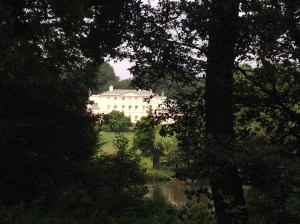
It was my first visit to the property, and I meandered along enjoying the uncity-like greenness as the path took me along under the trees before looping round and up a grassy rise where at the summit stood an ice house and dairy.

This, as a plaque outside pointed out, was “carefully positioned as an attractive feature” since this dairy was not a muddy outhouse tucked away to keep lowing beasts out from sight and smell, but a dainty ferme ornée where Lady Louisa, the second Countess of Mansfield, might ensure the production of delicacies for enjoyment with her friends in the dairy’s own private tearoom.
So far, so Marie Antoinette, I thought, reading how Louisa “supervised the dairy maid who lived in the cottage,” and then, jarringly, that “the central pavilion was home to the dairy maid.”
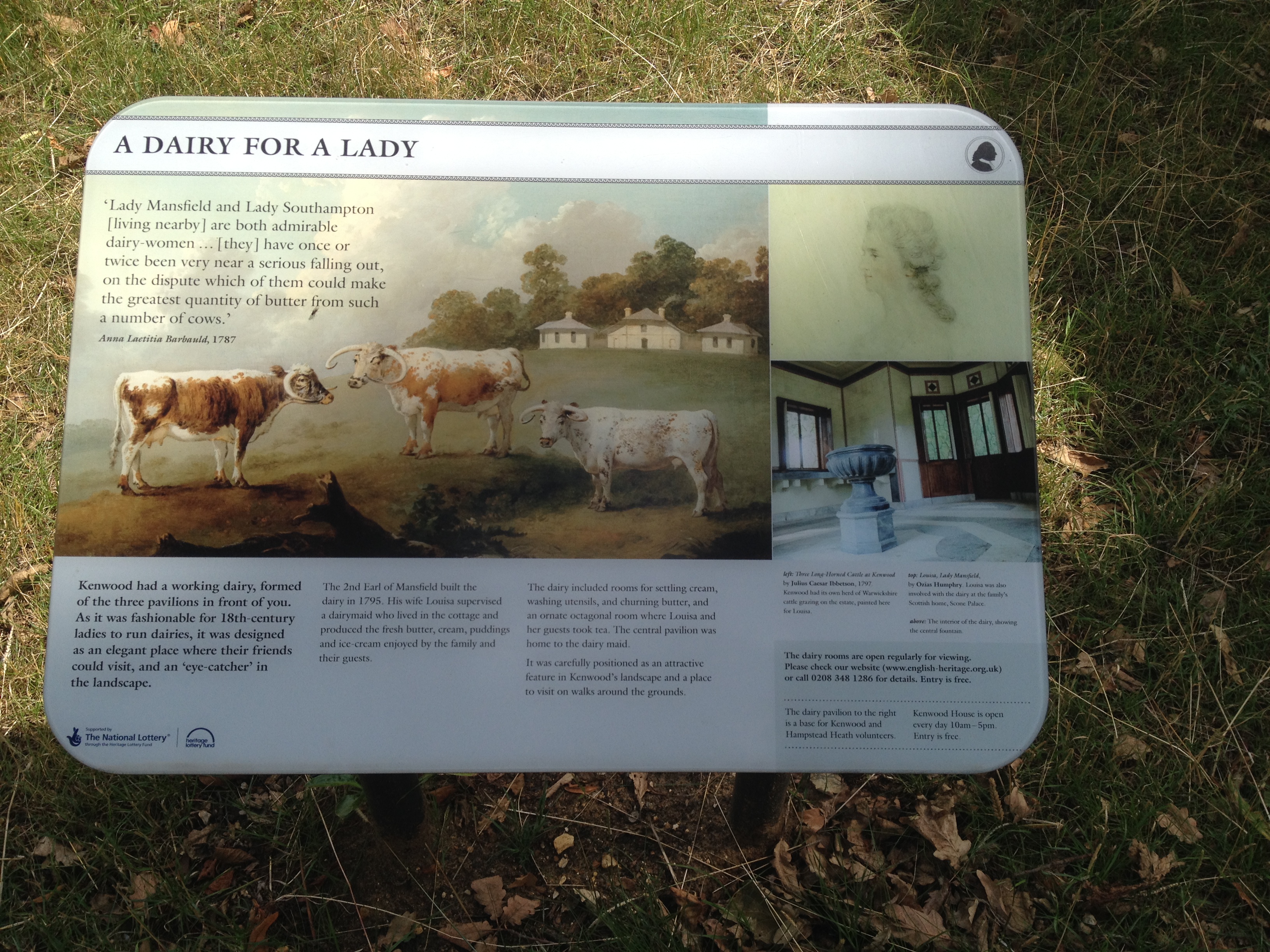
This woman’s (or women’s) names were not celebrated as were Dido’s, nor even remembered as is Maria’s, but the maid was a central part of the feature for the amusement of the Mansfield ladies. She “lived” in the ‘Dairy House’, as the cottage was called, but it is in her work at the dairy where she is now considered at “home”.
This is telling; both where she “lived” was a part of the dairy, and where she is at “home” was the property of the Mansfields, transforming her work and herself into something merely ornamental, a centre-piece to the entertainment of the dairy, sitting on its landscaped rise in view of the main house.
My research as ever does not allow my thoughts to escape for long, and this arrangement brought to mind recent reading on how Pompeian houses were designed to allow the surveillance of Roman slaves by their owners – and how slaves found freedoms from that surveillance. I also thought about Romans seem to have delighted in the display of slaves – as ornaments or in the flesh – in a world permeated by slavery.
In my leisure then, enjoying as could the Mansfields’ own guests the parkland and dairy, I can recover no real trace of the life of the dairymaid (or maids); her views are unknown and unseen, although the landscaping, if authentic, perhaps recovers some sense of the commanding overview from the house from the distance.

Indeed it is almost the grace with which Kenwood House still welcomes visitors – it seems less roped off than is usual in grand houses, the guides are friendly, and comfortable modern chairs invite you to sit – that makes me reluctant to criticise. Looking too at what is offered for schools, and the exhibition last year on slavery and justice, I can see how much thought goes into the education programme.
Perhaps though there could be still more on display for casual visitors, exploring how widely slavery affected the lives of everyone in the house and its grounds?

 Dr. Claire Millington
How interesting. Your linking back this visit to Roman slavery is fascinating. Have you had any dialogue with the ‘curator’ at Kenwood? Your final paragraph seems a useful suggestion.
Thanks Annie, and I’ve not – it’s something that intrigues me but one of those temptingly glittering threads leading who knows where that if I don’t stop myself following I shall find my core research unraveling under me for lack of time! Although it is now jotted on my blog for a later pursuit, if I ever have time. It may have to be one of my ‘academic otters’ (http://lizgloyn.wordpress.com/2011/07/21/the-proper-care-and-feeding-of-academic-otters/)
Thanks for that link. Academic otters – such a great phrase. I should also use something like it to store some of my side-road thoughts!