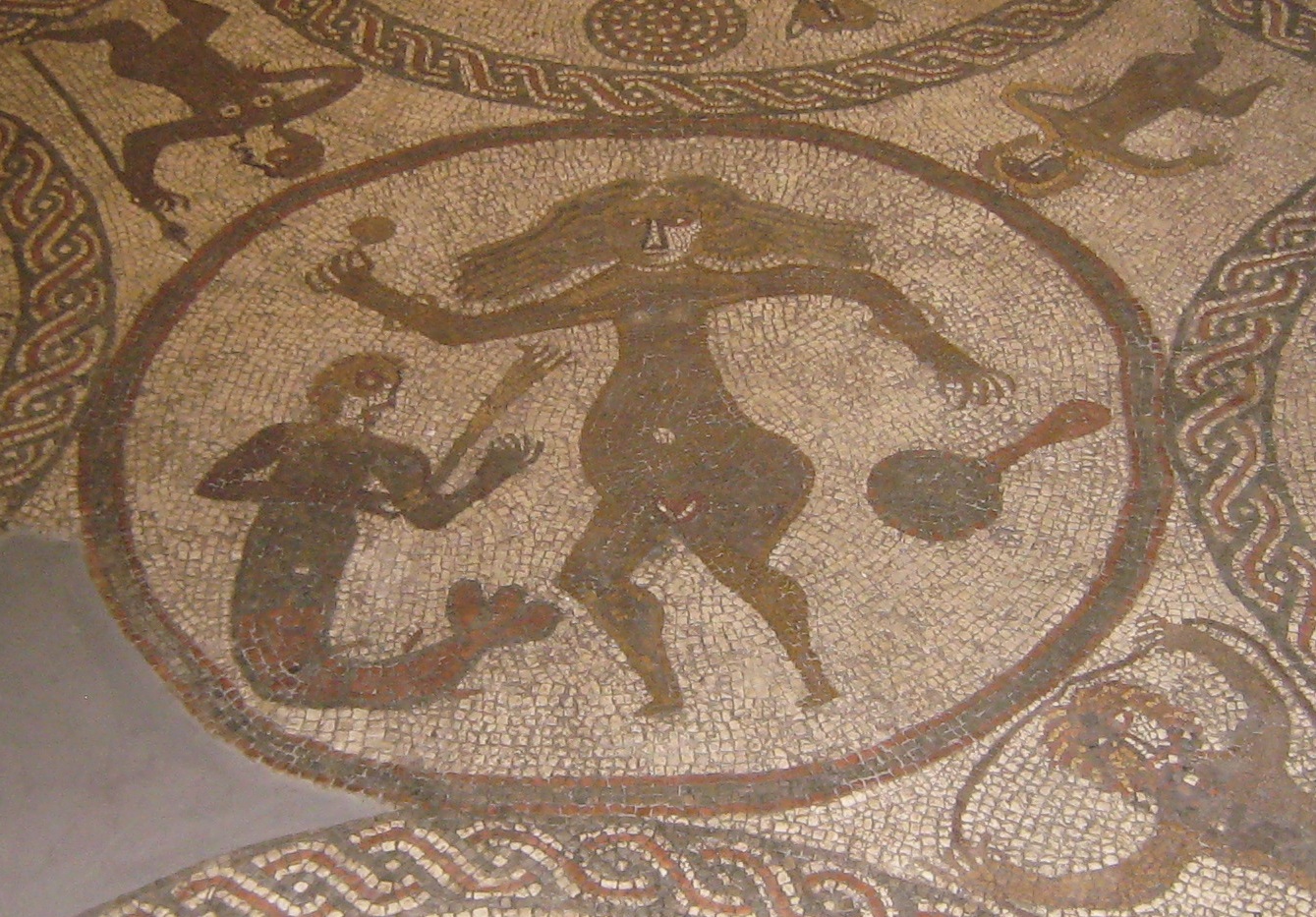
“It was a woman with a mirror,” said mum when we met up. She confirmed what I already had guessed, that the mosaic that I’d been looking up for research reasons was the same as the mosaic her mum’s dad had had a hand in the finding. The family story goes that my Great Granddad Samuel Turnbull was out on his bike near Kilham where he lived, when he saw a friend of his was ploughing. Sam was a farm labourer and the two men stopped to chat, with the friend showing Sam some bits of something that were coming up in the field soil. He was for ploughing it in, but Sam said no, looks like something, maybe best not. That something was the mosaic now known as the Rudston Venus, and thanks to the decisions of two farm workers, it has been preserved and is now in Hull Museum. There is a photograph, probably, of its finding, although mum is a bit poorly and unsure where it is. It tugs a memory, of a man with a bicycle standing by a wall with his friend behind, although my memory might be inventing that. I wonder who took it, maybe it was reported in the Driffield Times or maybe my great granddad had a camera out with him (though that seems unlikely). Hopefully it might turn up.
The mosaic is now in Hull Museum and belonged to a villa that had been known about since farm workers found it in 1838, as a story about it on Hull Museum‘s website explains. The account is somewhat negative about the workers, who are said to have dug through another mosaic seeking for treasure, although I wonder if they were told to do that by the landowner; the account isn’t very full. It also gives information about the discovery of the Rudston Venus, adding the date, 1933, and the farmer’s name Mr H. Robson, who was presumably my great granddad’s friend, unless the discovery was actually made by one of his labourers. This contestation about who saves or destroys, continue to be class-ridden in the kinds of folk-tales and stories the media tell about archaeological finds. These discovery stories, are now about detectorists treasure-seeking and bringing up finds that would otherwise not be brought to light, although too many detectorists are still more concerned with the money they can make rather than preserving archaeology.
This is not a popular view – the common man with his detector saving national treasures has become almost a folk hero – and it is true there are many knowledgeable and law abiding detectorists who report their finds (the law as it stands can be read here), and there can be a lack of resources for excavation of significant finds such as hoards. Museums are underfunded and detectorists and landowners who generally share the ownership of finds most usually charge museums the market value. Some of course do what I think is the right thing: give them to local museums (who must then pay to keep them secure). It also seems unfair to blame detectorists and leave the landowners out of the picture. And archaeologists are of course employed in the construction industry and try to record archaeology before it is destroyed, which can make our position ambivalent. It is complicated and fraught. EDIT: Tess Machling has blogged today about these problems in more depth.

The mosaic discovery is not to me its most interesting story in any case, for all that it directly involved my family. It’s only one tiny part of a much bigger picture about goings on in Yorkshire right back to Roman antiquity, and the lives of people who have lived there. Beyond the news stories about archaeological finds, it’s research that’s really needed to be able to understand something about the past that the finds represent – otherwise they are pretty baubles and not a lot else. Newspapers claim to write the first draft of history but they normally lose interest after that. So, I’m really glad that the Rudston villa has been well studied and published locally.*
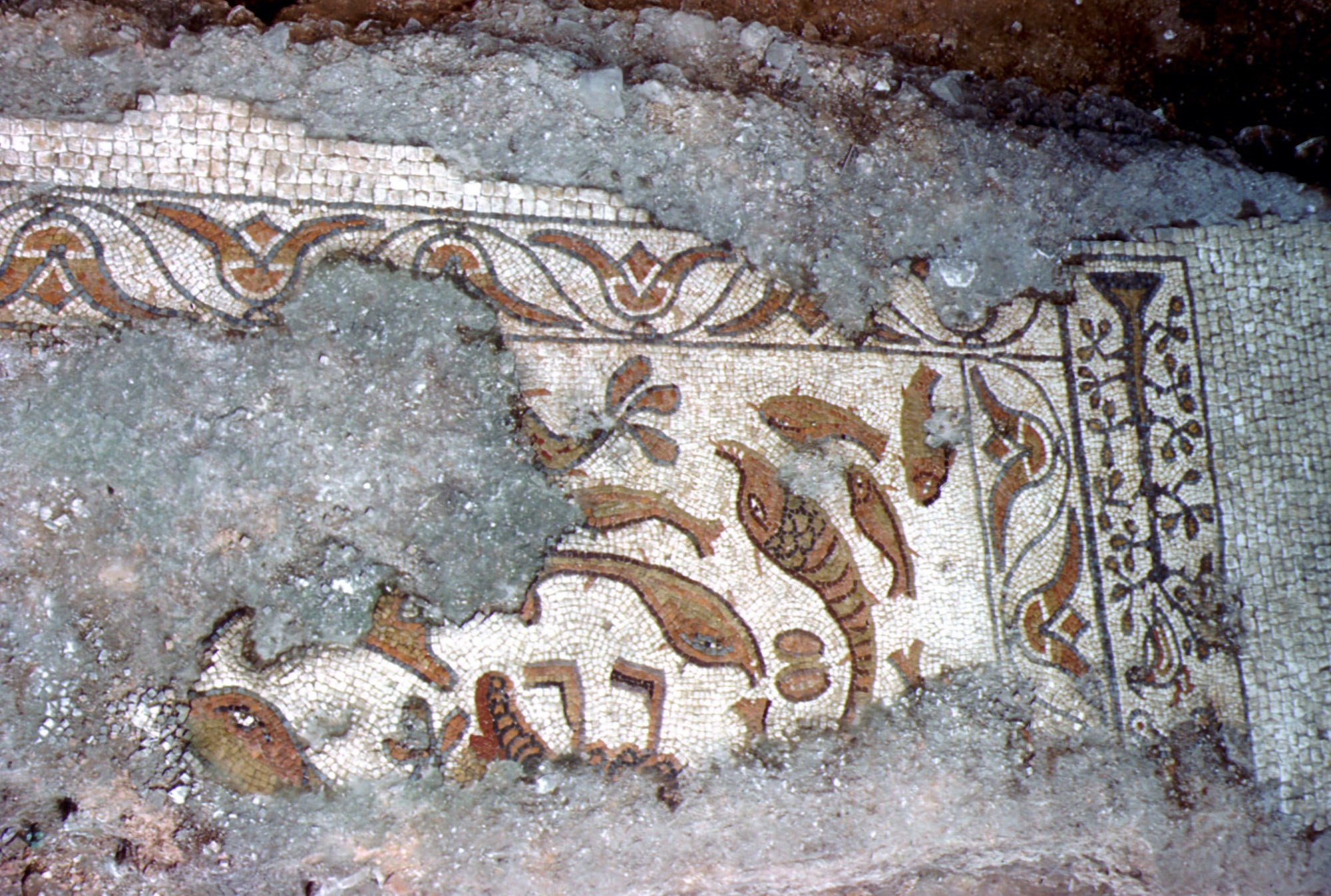
The mosaics at Rudston have a lot going on in them. There are classical ideas that have a distinctly North African flavour and are found only at Rudston, with designs probably carried back from Carthage. There are also decidedly local ideas and re-workings such as a motif unique to Britain, of a rake carried by the personification of Autumn in a mosaic showing the Four Seasons. Looking at the leaves blowing outside I start to drift into wonderings about the agricultural seasons and work, and how these changed in Roman Britain and after, more connections that can be followed through the material to try to better understand the past. Time for me to get back to my own research though, where this short story started.
*R. Ferraby, P. Johnson, M. Millett, & L. Wallace (Eds.), ‘Thwing, Rudston and the Roman-period exploitation of the Yorkshire Wolds’ by the Yorkshire Archaeological Society. The chapter on the mosaics by Eleri Cousins whose findings I summarise in this piece can be read for free here.

 Dr. Claire Millington
You must be logged in to post a comment.