I have been meaning to visit Bloxham Village Museum for quite some time but life and work always seem to push it down to the ‘would be nice to’ end of the priority list. However, news that the museum was putting on a temporary exhibition ‘Romans in Bloxham’ meant I just had to visit.

The museum is in a former court house and firestation, which building dates mostly to the 1680s, although some elements are said to be fourteenth century. It used to have a doorway through to a village school and in the nineteenth century was used as a soup-kitchen, with two coppers for its soup still in situ – I didn’t get a good picture of those but there’s one on its website.
It’s tiny, run entirely by volunteers, and so open only on weekend and Bank Holiday Monday afternoons from Easter until October. I wasn’t entirely sure what to expect and was impressed.

The museum is nicely laid out with cases containing objects related to the history of the village. Printed materials such as shop advertisements and tickets were effectively displayed in the kind of swinging panel case more often used to display posters on sale. This gathered together material that might have seemed a bit underwhelming in a case, but collected together in this way helped bring to life stories about the village.

It also had a good reconstruction of a shop, which visitors were invited to peer through the windows into, making the most of what is a small space. I’m always a bit of a sucker for reconstructions of shops and houses and this one is lovely.
But what about the Romans? The exhibition I think covers this quite well. A TV screen has a simple slide display of maps with known sites on it added chronologically from pre-history almost to the present, and an A-4 folder held printouts of the slides if you wanted a closer look. It wasn’t clear to me where the information came from, although I suspect that the museum has good connections to the County Archaeologist as well knowledgeable volunteers.
A bit more info about where the info about the sites came from would be good, especially as sites can acquire myths, which are interesting in their own right, and often the result of earlier work that later comes to be seen as a bit unreliable. I’m going to take the opportunity to plug here the excellent, free-access Rural Settlements of Roman Britain. This searchable map brings together different types of archaeological evidence for Roman activity, including sites. This shows that at Bloxham a cemetery was excavated – the square greyish blob to the left of ‘Bloxham’.
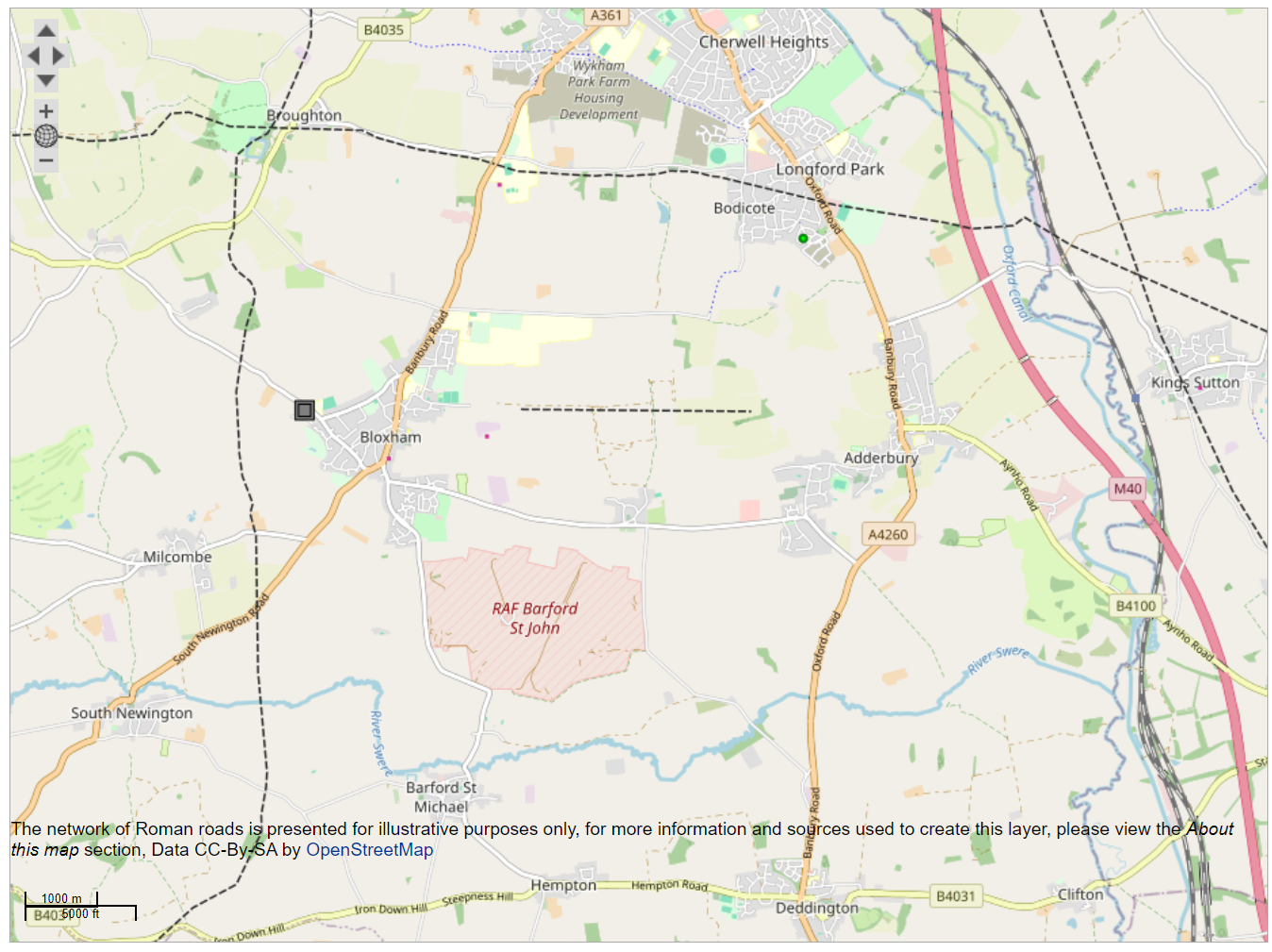
The map links to the information about the site, in this case coming from an excavation published in 1938 by W F J Knight in Oxoniensia. Knight, then Master at All Saints School, Bloxham, tells us that ironstone workers at the quarry had discovered a burial, and more discoveries followed and he decided to organise excavations.
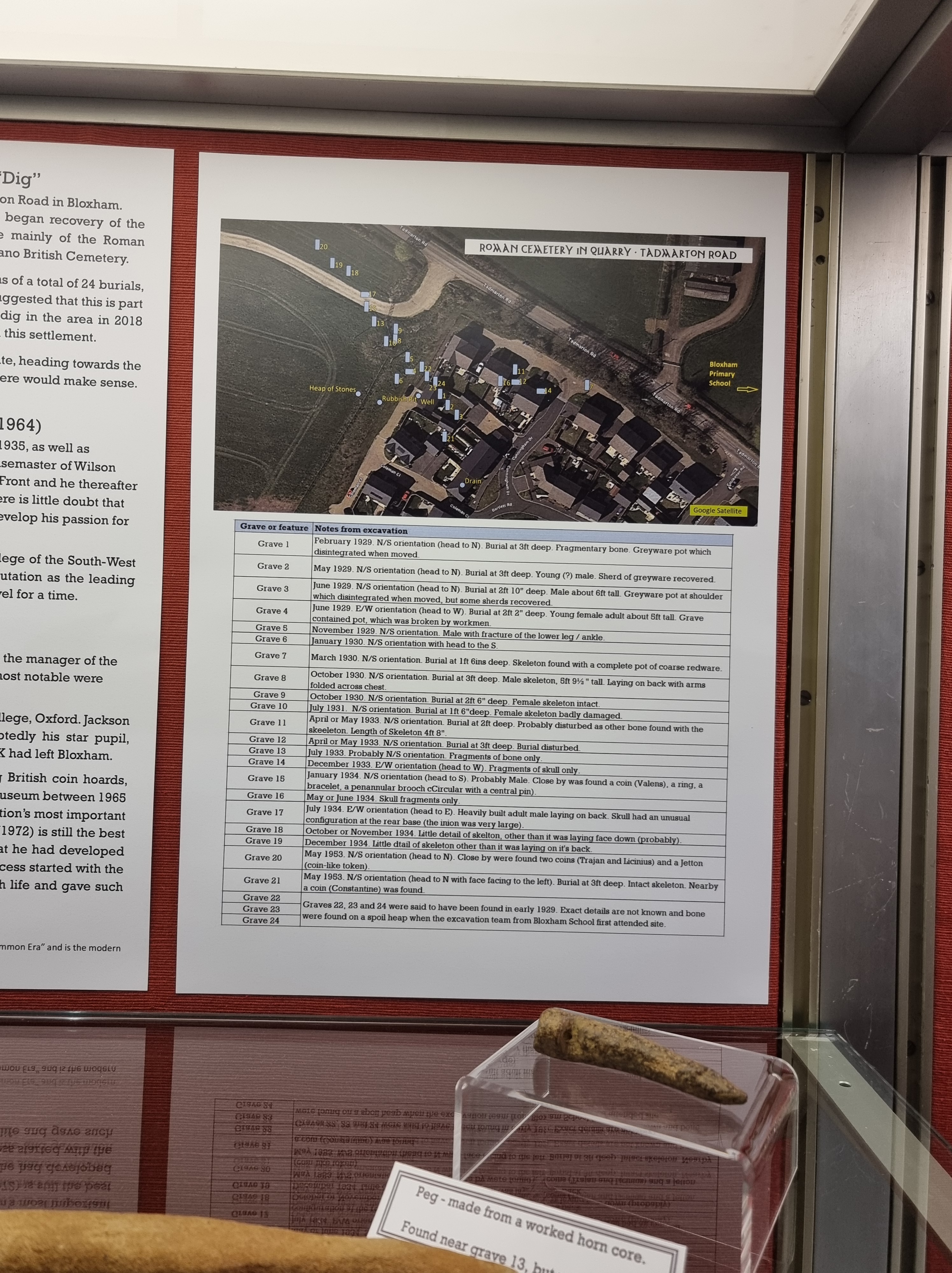
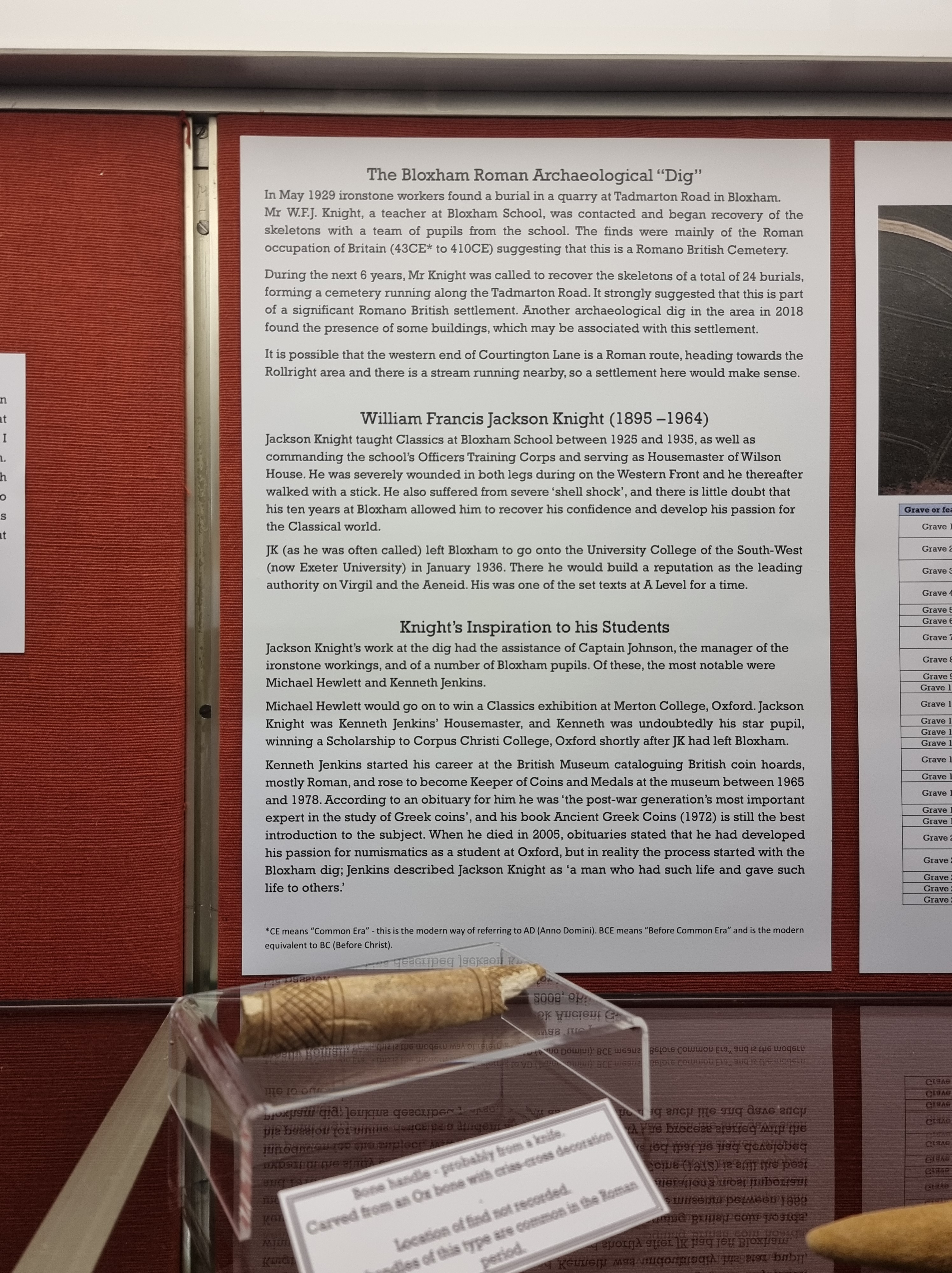
These excavations produced most of the material that was on display in the museum, as the case display explains, giving a history of the excavations and information about the burials found.

I loved the imaginative reconstruction drawing – based as the artist says on the history books of his childhood – alongside a bracelet found in one of the graves.

Not everything Roman in Bloxham came from these excavations – this terracotta head of a statuette is said to have been “found digging allotment in Milton”. Not an exact record by archaeological standards but as with the excavation history, gives a sense of the circumstance of the find. I think that’s what I particularly enjoyed about the exhibition and museum – it brought together the objects with the circumstances of their finding in a clear and interesting way. More exhibitions like this please!

 Dr. Claire Millington
You must be logged in to post a comment.