I’m in that limbo between sending off a book draft – hurrah! – and the return of peer review – ouch! Or ouch it probably will be because it is highly unrealistic to expect that everything about the draft is marvellous and in no need of criticism. The review will help me to make the book better. But it’s hardly a painless process, by all accounts – this is my first formal peer review, although supervisorial feedback was routine during the PhD.
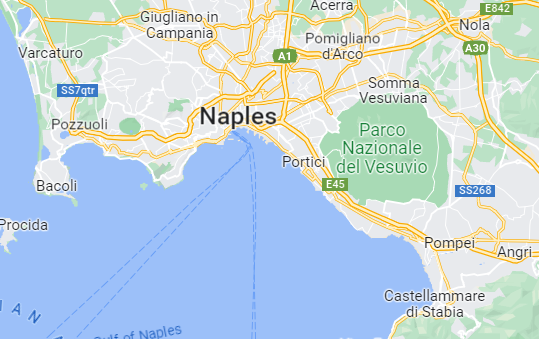
So in this meantime I’ve finished one of my side- projects, a chapter-book about two young girls escaping from slavery – and Vesuvius – in ancient Pompeii. In the cisterns under Pompeii they encounter a gigantic octopus, which I thought was my own re-working of the crocodiles in New York sewers myths. Except of course it’s not, the New York crocs are merely the latest iteration of semi-mythical somethings lurking nastily in the drains, and of course there is a classical antecedent. Aelian writes of an octopus with a taste for pickled fish who swam up a sewer to pilfer goods stored in a cellar in Puteoli. Not a million miles away from Pompeii then either.
Aelian’s octopus grabs the jars, wrapping them with its tentacles and crushing the earthenware to get at the delicacies inside. The development of the myth into terrifying modern sewer beasts has been tracked by the ethnologist Camilla Asplund Ingemark (www.jstor.org/stable/40206972) so I won’t add to that here except to wonder about the earthenware jar that appears in Aelian’s telling and the octopus motif that was so popular in Mycenean and Minoan marine ware ceramics.


These ceramics were made over a thousand years before Aelian’s tall tale and their motifs seem perhaps closer the octopuses that appear in Roman mosaics than to Aelian’s story – he mostly focuses on the cunning, strength and greed of octopuses. His text survives only in epitomised manuscripts so it’s difficult to be sure whether there is some connection between octopuses and pots. My modern version is a little different too; the cisterns of Pompeii were storm drains to collect rainwater run-off rather than sewers. Could an octopus survive in their brackish waters? Probably not, but I think like Aelian that it makes for a good story.

 Dr. Claire Millington
You must be logged in to post a comment.