
Took a walk around this rather spectacular modern earthwork and quarry and of course had to head down the research rabbit hole it offered. It is a disused quarry with some form of track and what looks like an enclosure or paling.


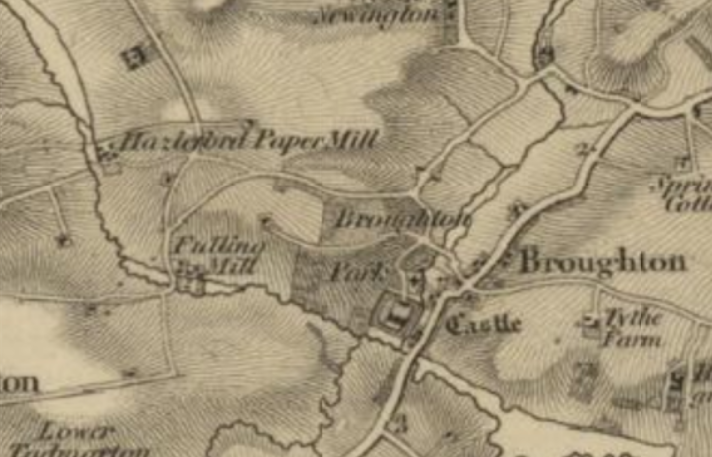
A bit of investigation through old OS maps shows how the land use has changed. The earliest OS map freely availably online (https://maps.nls.uk) is this one from 1869. These earthworks are below the road that’s roughly in the middle of Hazleford Paper Mill and Fulling Mill – names that indicate their industries.
The OS map of 1900 shows that the paper mill has become another fulling mill, and the fulling mill has expanded to include a dye works

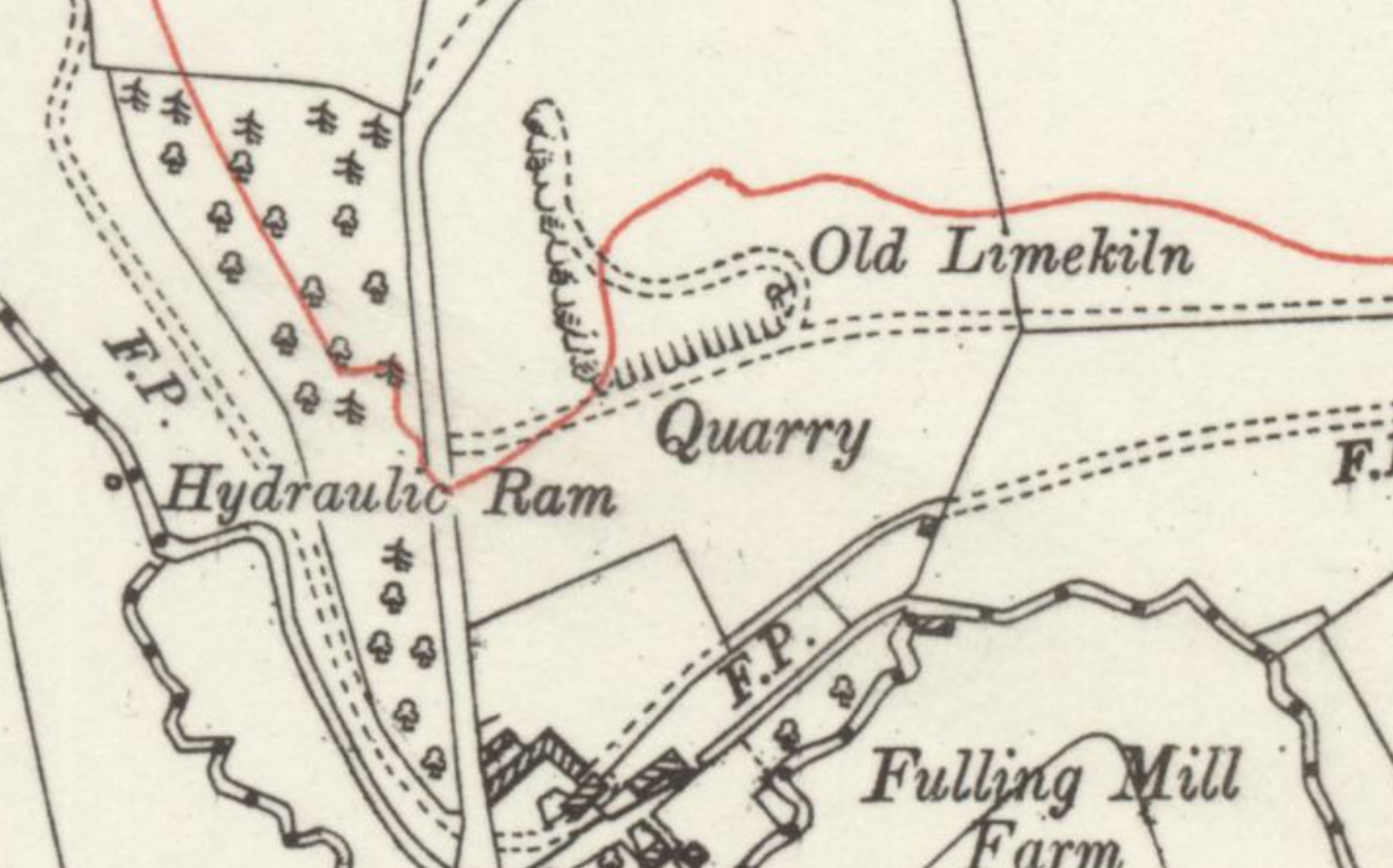
The next map update I can find is from 1923, by which time the fulling mill with dye works has gained a hydraulic ram. Also added to the map is what is described as an ‘old lime kiln’, which doesn’t appear as in-use on the earlier map. It’s difficult to know whether this is a feature that was missed on the earlier maps, or whether it was a short-lived addition to the local industries. It will have processed the limestone from the quarry into lime. This was used in fulling, and to amend the soil for agriculture. The remains of it are hidden in a patch of scrub and I will go back and have a look at what I can see on some future walk.
The reason for all this activity seems to have been the development in Oxfordshire of a plush industry. A history of the industry by Beckinsale was published in Oxoniensia in 1963 (https://oxoniensia.org/volumes/1963/beckinsale.pdf) . Beckinsale says that plush was being produced two miles away at Shutford from 1747, with the dyeing being done at the upper fulling mill here at Broughton. Fine plush in gorgeous colours was supplied via retail houses to almost every court in Europe for the adornment of household troops and retainers. Most of the cloth being finished would have been wool, but Beckinsale says that hand-shaved silk production was a considerable employer of local women.
Demand for this plush however dropped, and work was switched to power-woven, hand-finished plush for industrial purposes. Presumably the ‘hydraulic ram’ is connected to this change in plush production. The industry was already declining by the time the first world war put a stop to this demand, and it is likely that by 1923 that the ‘hydraulic ram’ may already have gone out of use.
Today the field is pasture and it is a peaceful place for a walk. The industrial monuments of the landscape though show that a little over a century ago it would have been filled with the noise of looms and the smell of dyeing, with carts carrying cloth for finishing and on to the markets in Europe. The industries – sheep and wool production, quarrying, lime production, cloth finishing and agriculture were intimately connected. Something to imagine the next time I walk along the grassy track!

 Dr. Claire Millington
You must be logged in to post a comment.