
Some real archaeology this weekend – joining fellow ‘frogs’ on the Thames Discovery Programme to survey the ancient timbers at Greenwich. Lots of washing mud off the medieval jetty – and scrubbing the weed from the riverwall…to uncover some curious marks.
I’ve heard of ‘masons marks’ and had assumed they were a sort of signature by a master craftsman, similar to an artist, to publicise their work. Simon Thurley suggests that although in Germany, statutes dictated how masons could register their marks – a bit like today’s professions. The fly in the ointment* is that there are no similar records for England.
Instead, as the masons basically did piece-work, in England they marked only to prove what payment was due. Individual masons varied their basic marks to distinguish themselves from other masons hired on the same job. Sparsely distributed marks – as these are – “indicate leisurely construction where there would be little confusion over payment.”
Thurley though, is talking about the riverwall at Whitehall, which he says was built c.1514-1546, and the Greenwich river walls were constructed in the C17, so it may not be the same. However, some of the Greenwich marks look awful similar to the ‘y’-form marks at Whitehall.
Further possibilities come from my mum – we’ve steeplejacks and stone masons in our family a couple of generations back – and she thought that the marks were to indicate liability for faulty work. I think there is quite a flourish to the forms too – they are more complex than a simple, variable ID needs to be – all of which suggests a sense of professional pride. Something to look further into – when I’ve some more time!

Can you see it?


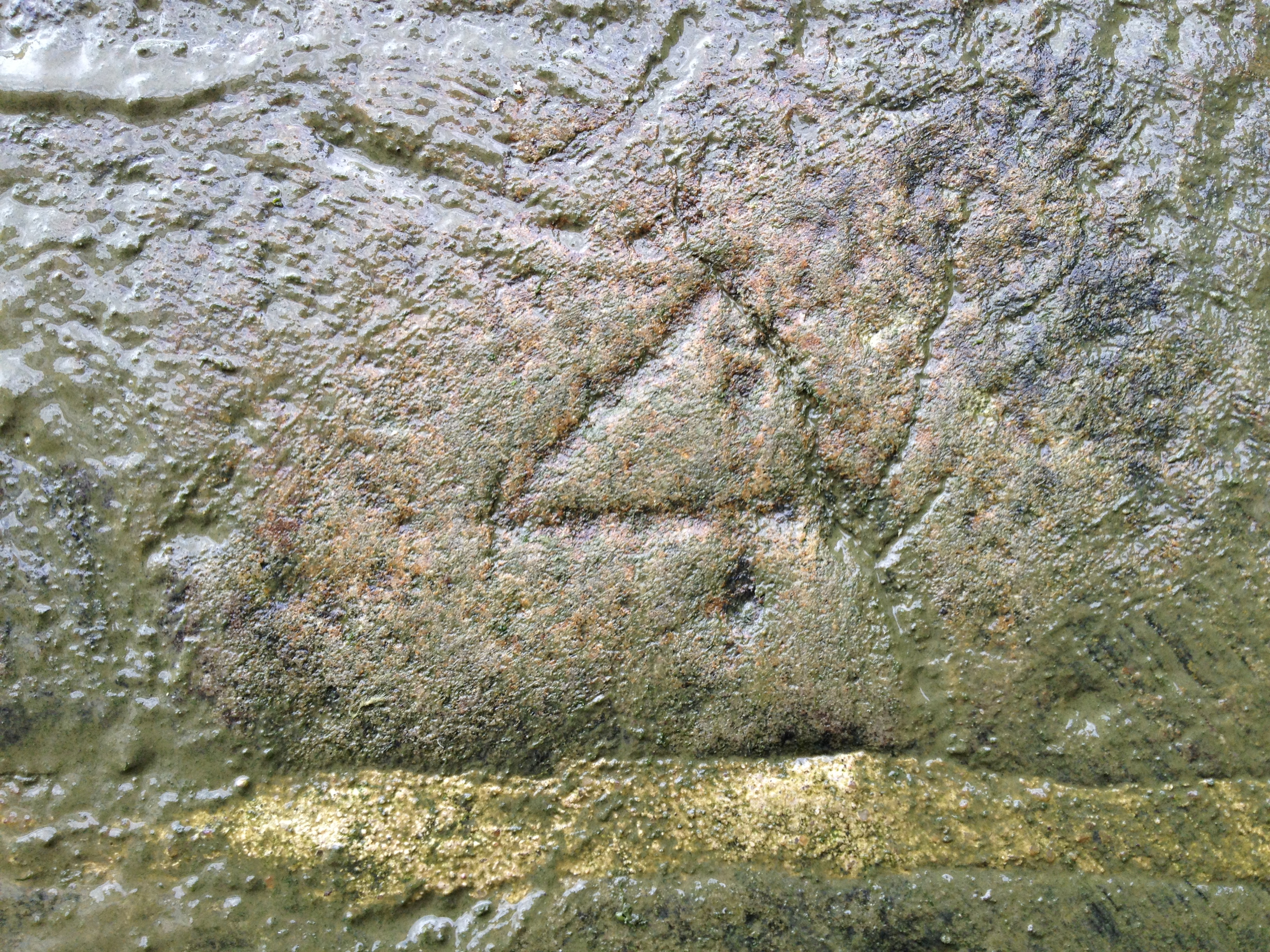
*ideally it would be in amber or something and could help you date your find.

 Dr. Claire Millington
You must be logged in to post a comment.